Feeds:
Posts
Comments

Pets or meat?

Hercules the kitty liked visiting these rabbits, who were being raised for meat.

Hercules the kitty liked visiting these rabbits, who were being raised for meat.

Europeans are uneasy in the aftermath of a scandal involving horse meat found in hamburgers and lasagna. A few weeks ago I wrote a piece about how people are comfortable eating some animals and not others.

Click here to read “Animal lovers question morality of eating pets“.

Funny English: Rise of the vernacular

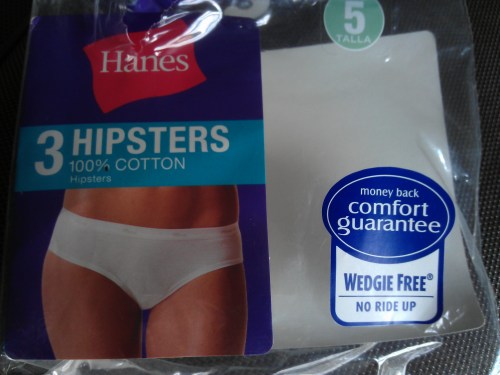
I spotted this package of underwear during a recent trip the the US.

Its “wedgie free®” comfort guarantee made me wonder: Since when is “wedgie” a polite enough word to use in marketing? And does everyone really know what a “wedgie” is? Last but not least, am I a hypocrite for using this semi-impolite word three times in a blog entry?

Make-up kit

“Beauty is in the eye of the beholder”. This age-old saying is less true than ever, if one considers the growth of the beauty industry. The sector that includes everything from cosmetics to plastic surgery profits from engrained notions of good looks.

It is estimated that every day, the Swiss population works its way through 64 tonnes of cosmetics and hair products – all in the name of looking better. For facial products alone, the Swiss spend SFr400 million ($428 million) per year.

Click here to read the whole article and see a gallery of people primping at swissinfo.ch.

Funny English: ew …

doggy dews

My aunt spotted this and sent it to me. It’s hard to imagine what the people in charge were thinking when they named their business.

Sure, there are “hairdo’s” and “do’s and don’ts” — but after the word “dog”, anything that sounds like “doo-doo” is surely a “don’t”. Don’t you think?

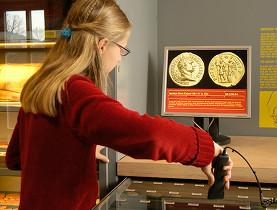
Scanning for knowledge at the Museum of History in Lucerne

With competition from social media and other online diversions, cultural attractions like museums must find innovative ways to keep the public’s attention. Swiss institutions are experimenting with new technology and special events.

“Swiss museums are trying to become more interactive – it’s only just starting,” notes Brigitte Schaffner. The course administrator for Basel University’s art management programme explains that local cultural institutions are, in part, taking a page from the book of their United States’ counterparts.

“Some museums, especially American ones, have been doing this for quite a while – using social media to let the public become a part of what happens in the museum and even part of the process of what’s exhibited,” she explains.

Click here to read the whole article at swissinfo.ch.